Disease & Tumor Database

To address the critical unmet need in access to care for hard-to-reach populations with advanced/metastatic breast cancer (ABC/MBC), the ABC Global Alliance and Pfizer have collaborated to develop a toolkit of relevant, community-based initiatives and best practice summary documents that aims to drive collaboration across the global ABC/MBC community.
The Academy of Oncology Nurse & Patient Navigators (AONN+) and Eli Lilly and Company Medical Affairs are pleased to present a live webinar designed to facilitate conversations with patients regarding adherence to breast cancer treatments. Attendees will have an opportunity to participate in a live Q&A following the presentation.

The therapeutic landscape of multiple myeloma (MM) has undergone a remarkable evolution over the past 2 decades. The development and application of novel agents and new generations of drugs, such as proteasome inhibitors, immunomodulatory drugs, and monoclonal antibody–based therapies, have resulted in improved prognosis and extended survival of patients with MM. Although these therapeutic advances are opportune and transformative, they add complexity to the MM clinical algorithms.

This resource guide is a review of bispecific antibodies, one of the new therapies currently being studied in clinical trials for patients with relapsed/refractory MM (RRMM), and best practices for oncology nurses and nurse and patient navigators, social workers, care coordinators, and advanced practice providers in supporting patients with RRMM who may be eligible for bispecific antibody–based treatment.


For patients with breast cancer who need surgery, we should encourage them to think this way—“when you look down, don’t see that your breast is gone; see instead that the cancer is gone.”
Adolescent and young adult survivors of breast cancer may face many of the same challenges as other cancer survivors, but some concerns, such as childcare and infertility, are especially salient for them.
Lung cancer screening can help detect the cancer early and facilitate treatment that is likely to be curative. Guidelines have been developed for clinicians to interpret screening results and recommend management.
A comprehensive update on multiple myeloma to include diagnostic tests, treatments, and related navigation strategies. Supported by Janssen Pharmaceuticals/Legend Biotech.
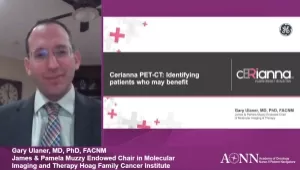
A recent AONN+ annual conference session discussed an FDA-approved PET imaging agent, which is used as an adjunct to biopsy for the detection of estrogen receptor (ER)-positive lesions to help inform treatment selection for patients with recurrent or metastatic breast cancer.
Patients with chronic lymphocytic leukemia (CLL) cannot expect to follow a textbook example of “how CLL is treated,” as each case is different based on patient age, comorbidities, and specifics related to mutations/severity. Veteran navigators offer expert commentary on CLL disease state, treatment considerations, psychosocial impact, and more.
This 16-page resource is designed for oncology nurse and patient navigators who are caring for patients with multiple myeloma undergoing chimeric antigen receptor (CAR) T-cell therapy.
Female hormones serve as fuel for more than 70% of breast cancers. This is important to consider when meeting patients who may be taking female hormones.
Breast cancer treatment has come a long way, offering more options to ensure the patient isn’t forfeiting anything to their cancer.
Yale University researchers say a community-based, collaborative oncology navigation approach works better than primarily hospital-based services in helping underserved minority women with breast cancer.
In episode 15 of the AONN+ Heart and Soul of Oncology Navigation podcast, experts discuss Living Beyond Breast Cancer’s Needs Assessment of Young Women Diagnosed with Breast Cancer and how oncology navigators can learn from these findings.
Some studies suggest that a breast cancer diagnosis correlates with divorce rates. Oncology navigators can assist patients who may be experiencing relationship troubles by keeping an open line of communication.
Some patients may find it difficult to give up smoking, even after being diagnosed with advanced lung cancer. These patients, and their family members, may require unique support through their diagnosis.
The U.S. Preventive Services Task Force (USPSTF) updated their recommendations on qualifications for annual LDCT screens. Institutions should begin to prepare for an influx of patients due to the expansion in qualifications.
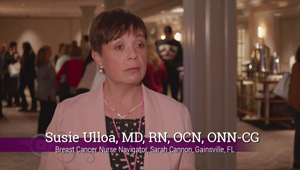
2019 ONE Award winner Susie Ulloa discusses how her experience as a breast cancer survivor has influenced how she navigates her patients.
NeuVax + Herceptin may provide a clinically meaningful benefit to breast cancer patients with low to intermediate HER2-expression.
If your bra could talk, do you know what she would tell you?
I wanted to share with you my weekend experience at the Young Survival Coalition Summit. I was asked to conduct a 4-hour workshop for young women with stage IV breast cancer. The workshop title I was given was “Building Your Legacy.”
It’s here! October—National Breast Cancer Awareness Month—although honestly, this type of cancer is very much in the public eye throughout the year. Breast cancer survivors, those at risk, and families who have lost a loved one to this disease have made it their charge to keep a pink theme year round.
A special thank you to the thoracic nurse navigators who came forward to create the thoracic certification examination. It is a sign of professional commitment and growth to volunteer for a task that will help one review their profession as well as learn something new such as test question development.
If your newly diagnosed patient meets the criteria for warranting a genetics consultation and testing, do the necessary paperwork to have it happen BEFORE surgery!
Do you specialize in thoracic cancer?  Then we had you in mind when we decided to begin the development of subspecialty certifications!
Despite research being conducted and confirmed on the significance of breast density, most women don’t know that having dense breasts increases their risk for breast cancer and reduces a mammogram’s ability to detect cancer, according to a University of Virginia (UVA) School of Medicine study.
Along with the diagnosis of breast cancer comes many decisions regarding treatment options. Oncotype DX, a genomic/gene expression assay, provides quantitative assessment of chemotherapy benefit and risk of distant recurrence in early-stage estrogen receptor–positive (ER+), HER2/neu-negative breast cancer to assist in developing individualized treatment plans.
The authors present a case demonstrating the unique and complex challenges facing patients with head and neck cancers, public health interventions to reduce risk, and available screening to promote early detection.
There are various points along the journey that we, as nurse navigators, need to be at the side of our patients when critical treatment decisions are being made. This is something that you do every day, and are more than familiar with regarding your role in education and support as it relates to this type of decision making.
Commonly when a breast cancer nurse navigator is educating and supporting a patient, the time period is focused on the point of diagnosis through their acute treatment. How do we really know if the patients, now as survivors, believe the right decisions were made regarding treatment options? How do we know they felt the decisions were made with their active input? Were they confident in their choices?
When we are discussing minorities, we are usually referring to African American, Hispanic/Latino, and the American Indian/Alaska Natives in our society. In addition, underserved women are those who have a decreased income and socioeconomic status, lower education levels, commonly lack health insurance, and have limited access to healthcare in general. These patient populations are particularly challenging when facing the diagnosis and treatment of breast cancer.
It is interesting to read or see opposing views on an issue in medical care. Healthcare professionals do a wonderful job on quoting facts and research findings. What is normally missing is the voice of the patient.
Do you ever read the latest research studies and ponder that if you took a conclusion from one study and combined it with a conclusion from another, there might be an avenue for better navigation? This might be a hazard of reading too many findings at one setting!
Seventy percent of patients completing her acute treatment (surgery, chemo, and radiation) will be candidates for taking hormonal therapy. All too often, patients are not well informed, however, about the purpose of this pill to be taken once a day for 5 years or more, nor do they realize its level of importance.
In case you are not aware, the most common medical malpractice issue medical providers deal with today relates to breast cancer care—specifically, misdiagnosis, delay in diagnosis, and/or failure to follow standard of care. So it is probably not a surprise that the nation has a shortage of breast imaging radiologists and soon will be facing a shortage of breast oncologic specialists as well.
This article continues our discussion of issues that can result in a medical malpractice case regarding breast cancer. Though not an exhaustive list, it summarizes (when combined with part 1) the most common reasons why a breast cancer patient or family member on behalf of the patient would pursue legal action against a provider.
Although 80% of women today are good candidates for lumpectomy (breast-conserving) surgery, we continue to see nationally a smaller number of women actually having this procedure and instead undergoing mastectomy procedures.
Oncology nurses for decades have assessed the psychological needs of their breast cancer patients. So it is not surprising that this assessment would become an important function for an oncology nurse navigator as well.
When it comes to navigation, there is a tendency for us to focus on patients who will be surviving their cancer diagnosis and treatment. More and more patients with metastatic cancer, however, are surviving longer than ever before.
Though most women diagnosed with breast cancer are good candidates for breast conservation therapy, there remains a portion of women diagnosed who need to undergo mastectomy.
If all breast centers had Dr Ruth as a faculty member, there would be no need to write this article. But they do not. It is important to bring up this sensitive topic early in your interactions with your breast cancer patients. Usually the first thing a woman worries about, however, is her mortality.
Approximately, 5 years ago I applied for a job as a Lung Cancer Nurse Coordinator. My experience in oncology included working as a radiation oncology nurse and an infusion nurse. To be honest, I wasn't quite sure what the new job entailed, but I was anxious to move on to something new.